
Rebuilding After Injury: My Summer of Training
If you don't already know me, my name is Skylar Patten, and I race for Snø Racing's Continental Team. Last year was my first year racing professionally after college, and it was a bit of a letdown, to say the least. My final year of college was derailed by a severe back injury that kept me from racing that season. It was essentially the same injury I had in high school, but to a much greater degree. I re-bulged my C4/5 disc and likely re-injured or aggravated the stress fracture I had in high school.
Throughout college, I had raced well through quite a bit of adversity, including sinus infections, sinus surgery, and wrist surgery. Despite those setbacks, I was consistently able to race at a level I was happy with, while knowing I could be even better without those obstacles. I assumed coming back from my back injury would be similar. Unfortunately, it kept me from training properly until September, meaning I missed a substantial amount of roller-ski volume. That volume had been a major part of what allowed me to race my fastest in previous seasons. Without the necessary volume and intensity on roller skis, I simply couldn't race at the level I wanted.
One thing that stood out was my heart rate. Last season, my maximum heart rate in a race was eight beats per minute below what I would typically reach during a race season. That might not sound like much, but it felt like I was missing the top 1,000 to 2,000 RPMs if I were a car. I knew I had more to give, but I couldn't access it.
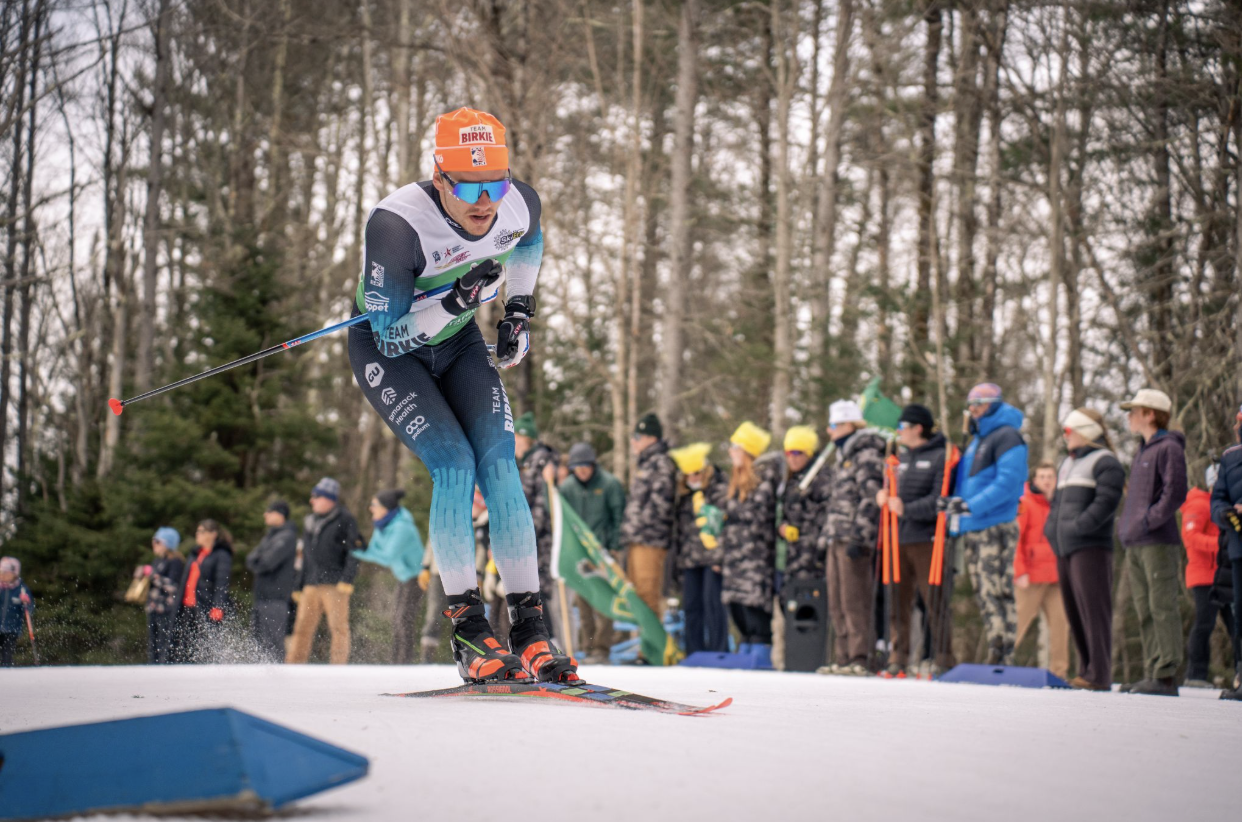
Going into this summer, I had a pretty clear set of priorities: build a lot of easy volume on roller skis, spend a lot of time training in L3, and get as much time as possible on the roller-ski treadmill. I wanted to rebuild the foundation that I had missed the previous year while figuring out how to get my back to tolerate the training I needed.
Before getting into the summer's training, I think it's important to talk about recovery after the season. I usually take a week completely off and spend most of April doing very easy, low-volume training. That gives my body a chance to recover before I start ramping things up in May.
By the end of last season, I felt like my back was reasonably manageable. I still had to do some work before skiing, but it wasn't anything too extensive. Toward the end of April, I started doing some shorter, faster runs than I was used to. Since I was in a relatively flat area, a lot of those runs were on concrete around the city. Growing up in Park City, where I did almost no running on asphalt, this was a pretty significant change in the impact my body was experiencing.
My back became irritated, but I didn't think much of it because I wasn't doing a lot of other training at the time. Then, on May 1, I finally allowed myself to roller ski and within 30 minutes, during a small skate push while cornering on classic skis, something in my back was tweaked. That one movement set me back to nearly where I had been a year earlier. For a couple weeks, I genuinely thought I might have to quit skiing.
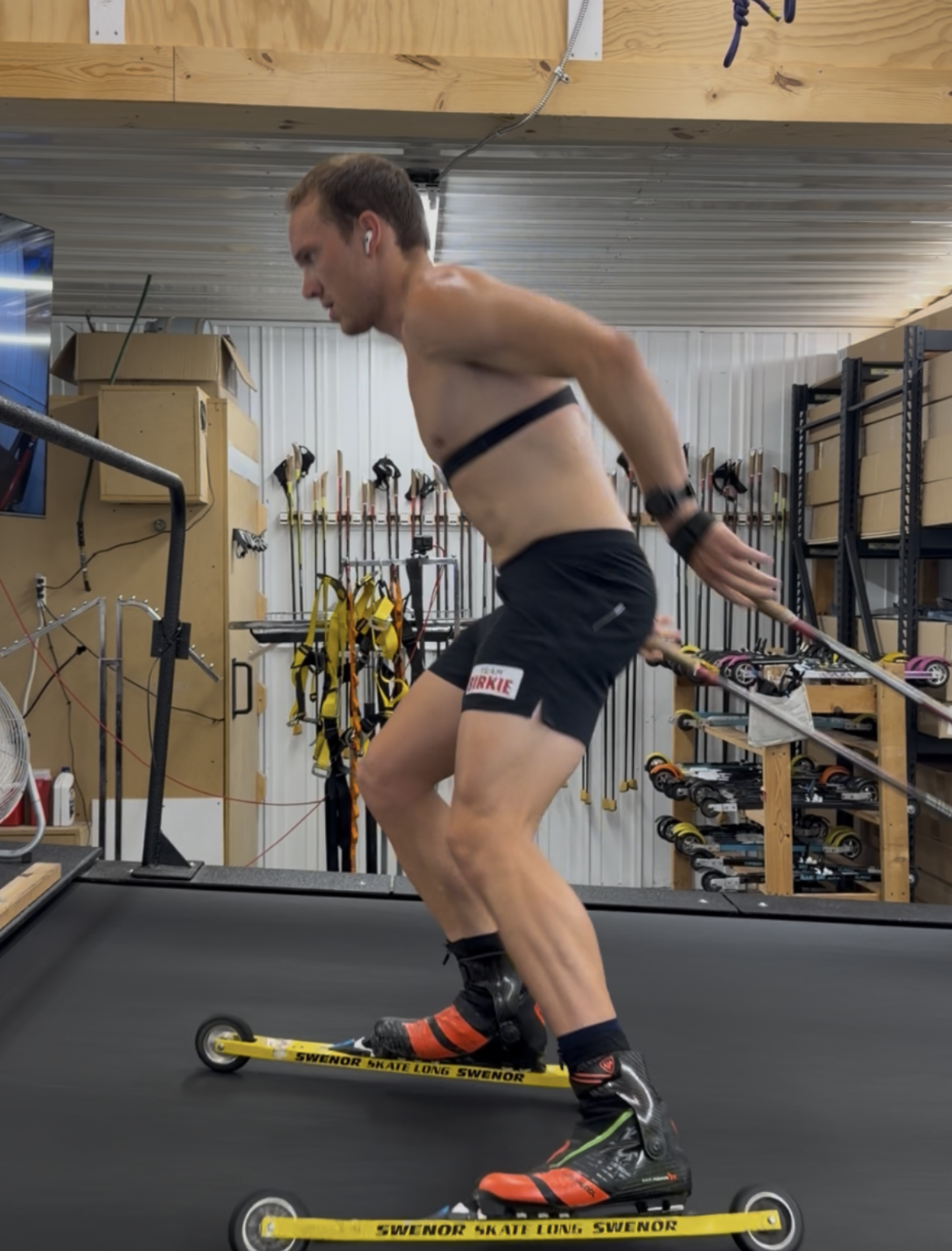
Skate intervals on the Pioneer Midwest rollerski treadmill.
Thankfully, with help from Cara Battles at Precision PT and Annika Pasch, a physical therapist with US Biathlon who was living in the area and offered to help, I started feeling better much faster than I had the previous summer. I took a week completely off training, but interestingly, I was able to start skating again within a week. The previous summer, skating had been much harder on my back than classic skiing. This time, classic skiing was the bigger challenge.
I was fortunate to be able to build back into skating much faster than I had the year before. Within a couple of weeks, I was doing intervals again, which was a huge relief. I was no longer wondering whether I would have to quit skiing.
I did, however, need to make some changes to my daily routine. Every morning, I started rolling out my quads while eating breakfast. This seemed to help loosen up the muscles. I then moved through five banded exercises to activate my glutes and deep core muscles. Before each training session, I added one more quick glute activation routine in the parking lot.
I also started doing my intervals on the roller-ski treadmill at Pioneer Midwest. My biggest technical issues are failing to use my glutes effectively while skiing and arching my back. The treadmill made it much easier to see when I wasn't stabilizing my core properly and to make immediate adjustments.
For about a month, I primarily did skate intervals because I had to reintroduce classic skiing much more gradually. But it turns out that doing skate intervals twice a week, with one session on the treadmill, makes you pretty good at skating! More importantly, the treadmill gave me a controlled environment where I could see my progress from week to week.
I also got some encouraging confirmation that the training was working during a time trial with Midwest REG. I was able to get within two beats per minute of my maximum heart rate. It finally felt like it had in previous seasons. My muscles were fit enough to take advantage of my aerobic capacity again, and I could access the intensity I had been missing.
One of my biggest priorities this summer was rebuilding my aerobic base. Easy volume is one of the most effective ways to improve efficiency in our sport. The energy cost is relatively low, which means you can accumulate a lot of training and get a substantial benefit without digging yourself into a hole.
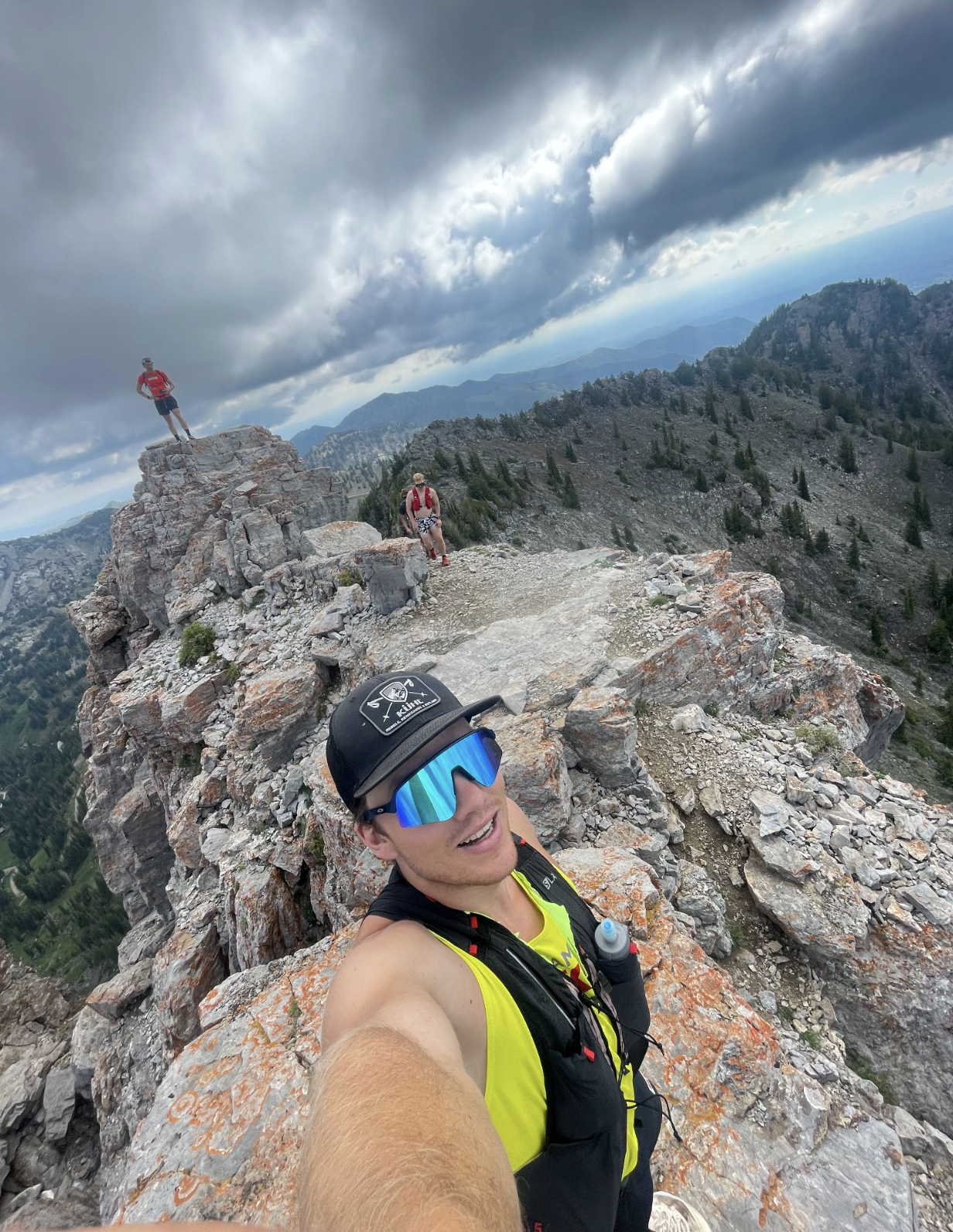
During a hike in Park City, Utah this summer.
I also think L3 training is one of the most effective ways for me to get faster. I generally aim for lactate concentrations between 2.7 and 3.7 mmol/L, with intervals that progress in intensity. My understanding is that this type of training helps drive aerobic adaptations, including increases in mitochondrial capacity, allowing me to ski faster at a given oxygen consumption.I wanted to make this kind of training the foundation of my summer before adding more intensity.
Another major goal was to introduce double-threshold training. My criteria for starting were that I needed to consistently handle at 60+ minutes of L3 with lactate levels below 3.7 mmol/L throughout the session. Just as importantly, those sessions couldn't leave me excessively fatigued afterward.
By the end of July, I was able to start doing double-threshold days, just before we headed to our training camp in Park City. By then, my back was finally tolerating classic intervals, which was perfect timing for altitude training.
The main activity I was still cautious about was running, especially on flat ground. Fortunately, Park City offered plenty of opportunities to run uphill, which didn't seem to load my back as much. Downhill running was also more muscular and didn't seem to bother it in the same way. I still had to be careful about when and how much I ran, though. Speed sessions remain the hardest thing on my back. I have to be mindful of not pairing them with a run on the same day or placing them too close to a big running session. Managing those combinations has become an important part of keeping my training consistent.
I didn't do double-threshold training at altitude, but I resumed it after taking a recovery week when we returned. This was my first time experimenting with double thresholds, and I found them to be an effective way to increase the training stimulus. However, they also meant giving up one of my strength sessions. Initially, I didn't think that would be a big deal because I felt I was already strong enough. But after a block of training with only one strength session per week, I noticed that I wasn't feeling as strong as I wanted. In the future, I may use double thresholds more sparingly to preserve two strength sessions per week, or schedule my strength sessions closer together to make room for both.
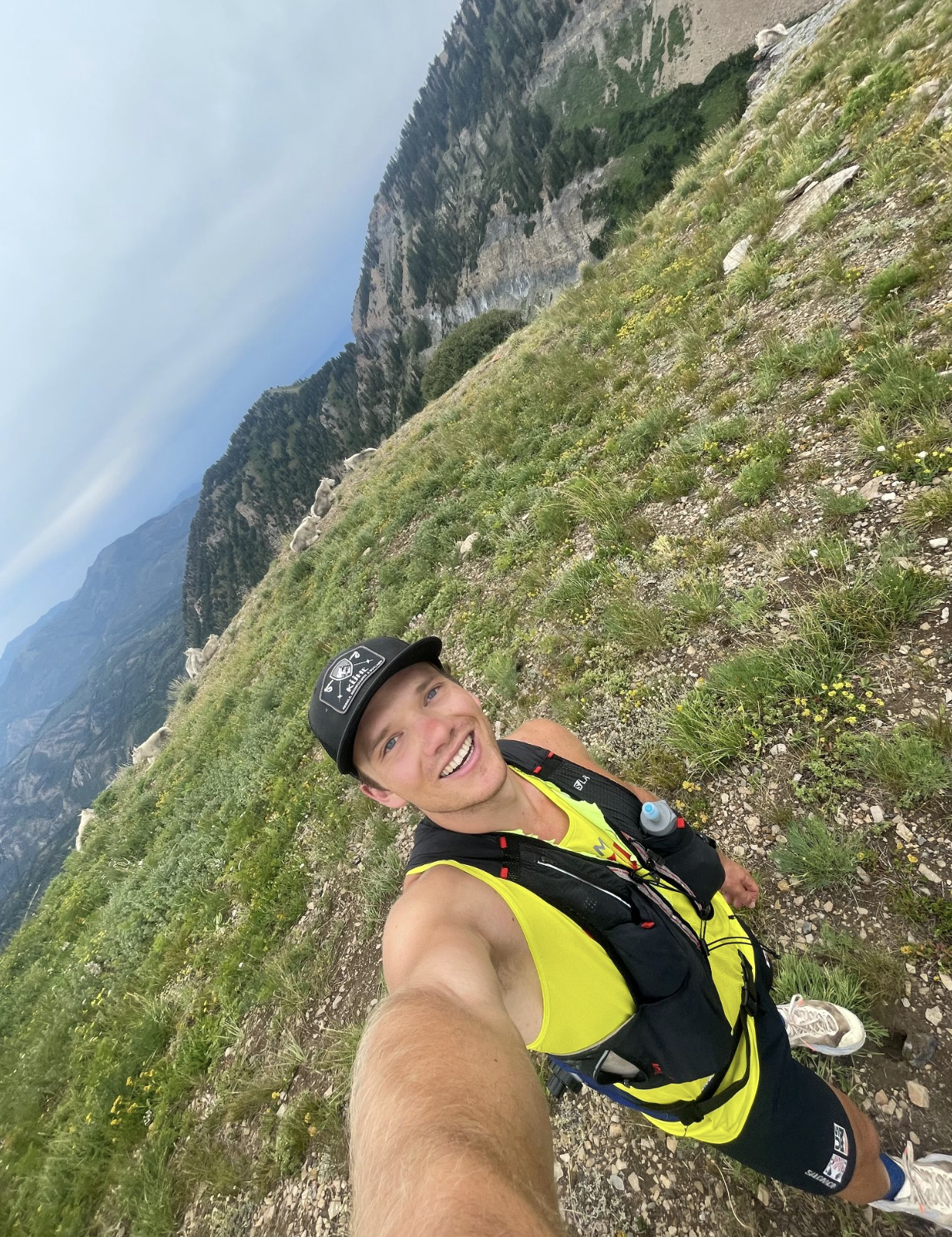
Training is largely a balancing act between stimulus, adaptation, and recovery. You need enough training to create a stimulus, enough recovery to handle the harder days within each week, and periodic recovery weeks to allow your body to adapt and absorb the work you've done. More training isn't necessarily better if you can't adapt from it. My typical training structure is built around hard days on Tuesday, Thursday, and Saturday. These generally consist of intervals and strength on Tuesday, speed on Thursday, and intervals and strength again on Saturday. I like keeping this structure relatively consistent throughout the summer and fall. From May through roughly August, I prefer to focus primarily on L3 training before gradually introducing L4 as the season approaches. This summer, I learned that I need to be more careful about how much L4 training I add at once. Higher-intensity training is necessary, but it takes more out of me than I sometimes realize from one week to the next. By the end of a big training block, I found myself deeper in a hole than I had intended, and I eventually got sick. In retrospect, that illness may have been a blessing in disguise. It forced me to take a week off, reset, and reevaluate my approach before moving into the fall.
I'm now planning to approach my fall training with a little less L4 and L5 work and more L3. I think L3 is one of the things that makes me feel the fastest, and I want to maintain that while gradually building the higher-intensity work I need for racing. I may also change my speed sessions to include slightly longer efforts. While building my aerobic base is essential, I think the ability to move at very high speeds is just as important to becoming a faster skier. Short, fast efforts develop the neuromuscular ability to produce and maintain high speeds, even in distance races, which remain my primary focus.
Overall, this summer has had its share of ups and downs. Having my back flare up again in May was a pretty discouraging way to start, especially after everything I went through the previous year. But the progress I've made since then has given me a lot of confidence. I'm still figuring things out, and I know there will be more adjustments along the way. But I'm optimistic about where things are headed and excited to see what this winter brings. After a year of feeling like I couldn't access my full potential, I'm looking forward to getting back to the starting line feeling like myself again.